




Positive Pressure Conveying System
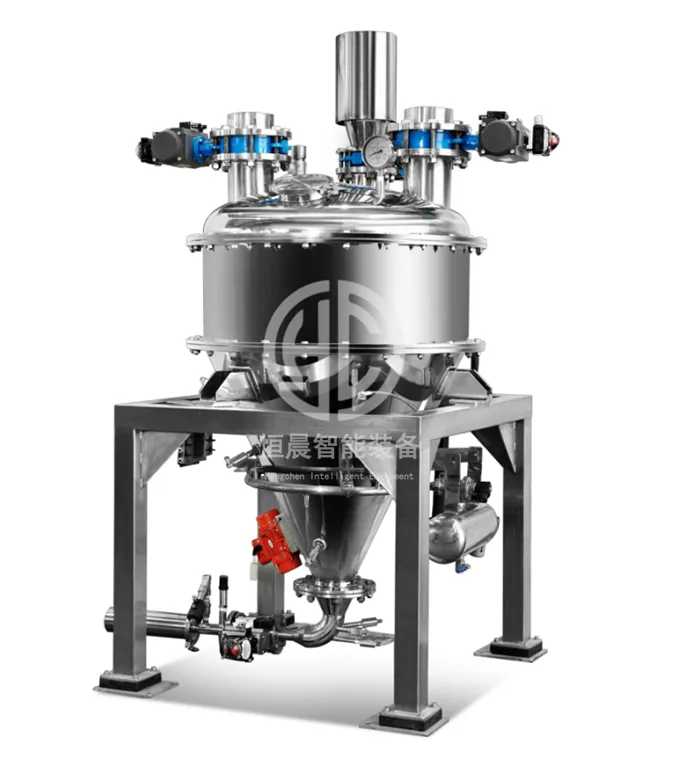
A positive pressure conveying system is an industrial device that uses compressed air as the power source to transport granular, powdered, or lump materials through closed pipelines under conditions above atmospheric pressure. Its core feature lies in utilizing high-pressure gas to propel materials, enabling efficient and clean automated conveyance. It is widely applied in industries such as power generation, cement, chemicals, and food processing.
The system achieves efficient and enclosed industrial transport by driving materials with high-pressure gas. Selection of the system requires comprehensive consideration of material characteristics, conveying distance, and energy consumption. In sectors like cement and chemicals, its advantages in long-distance and automated transportation are particularly notable. However, regular maintenance is essential to ensure operational stability.
Applications
Widely used in the power, building materials (such as cement), chemical, and food processing industries, it is suitable for the automated, enclosed conveying of granular, powdered, and lumpy materials.
Product Description
Features of Positive Pressure Conveying System
- High-efficiency Conveying: Utilizes compressed air to propel materials, resulting in fast conveying speeds and high efficiency, ideal for large-scale production.
- Enclosed and Clean: Fully enclosed pipeline conveying effectively prevents dust dispersion, maintaining a clean production environment and meeting hygiene standards.
- Suitable for Various Materials: Can convey a variety of materials, including granules, powders, and lumps, offering strong compatibility.
- Long-distance Transport Capability: Suitable for long-distance and complex pipeline material transportation, saving on manual handling costs.
- High Level of Automation: Enables continuous, unattended automatic conveying, improving production efficiency and stability.
- Energy-saving and Controllable: Pressure and flow can be adjusted according to material characteristics and conveying distance, optimizing energy consumption.
- Easy Maintenance: The reasonable structural design facilitates the inspection and maintenance of pipelines, valves, and the compressed air system.
Technical Parameters of Positive Pressure Conveying System
| Parameter | Description |
| Conveying Capacity | Throughput per unit of time, typically measured in tons per hour (t/h). |
| Conveying Distance | Total equivalent conveying distance (horizontal distance + vertical distance + equivalent distance for elbows/bends). |
| System Operating Pressure | Low pressure (< 0.1 MPa), Medium pressure (0.1–0.3 MPa), and High pressure (> 0.3 MPa). |
| Air Consumption | The volume of compressed air required per unit of time (m³/min). |
| Solid-to-Gas Ratio | The ratio of the mass flow rate of the material to the mass flow rate of the air; a key indicator of conveying efficiency and economy. |
| Pipe Material and Diameter | Selected based on material characteristics; common materials include carbon steel and stainless steel, with diameters ranging from DN40 to DN200. |